Enhancing Outdoor Spaces with a Solar Bird House Feeder
 Jordan HaleStaff Writer
September 8, 2026. This exploration details the aesthetic and functional integration of solar-powered avian architecture into residential landscapes. It is written for homeowners seeking to balance ecological support with sophisticated garden design.
I remember the late August afternoon when the humidity finally broke, leaving the air crisp and the light hitting my backyard at a sharp, golden angle. I was sitting on the porch, watching the shadows stretch across the flower beds, and I realized my garden felt incomplete once the sun dipped below the oak trees. The space transitioned from a vibrant sanctuary to a silent, dark void. Many gardeners face this disconnect; we spend months cultivating life, only to lose sight of it for half the day. According to the Cornell Lab of Ornithology, creating a habitat that supports birds year-round requires more than just food; it requires a reliable environment that integrates safely into the existing landscape. The challenge is often logistical. Traditional bird houses are beautiful but invisible at night, and standard electric lighting requires invasive trenching or messy extension cords that disrupt the very soil we try to protect. I wanted something that felt like a natural extension of the garden, not a plastic after-thought. I found myself searching for unique garden solar lighting for bird lovers that could bridge the gap between daytime utility and nighttime atmosphere. The first thing I noticed was how most solutions felt flimsy, lacking the weight and texture of a permanent garden fixture. I needed a piece that could withstand the erratic weather of the transition seasons while maintaining a visual presence that didn't scream "utilitarian plastic."
Photo by Alexas Fotos on Pexels
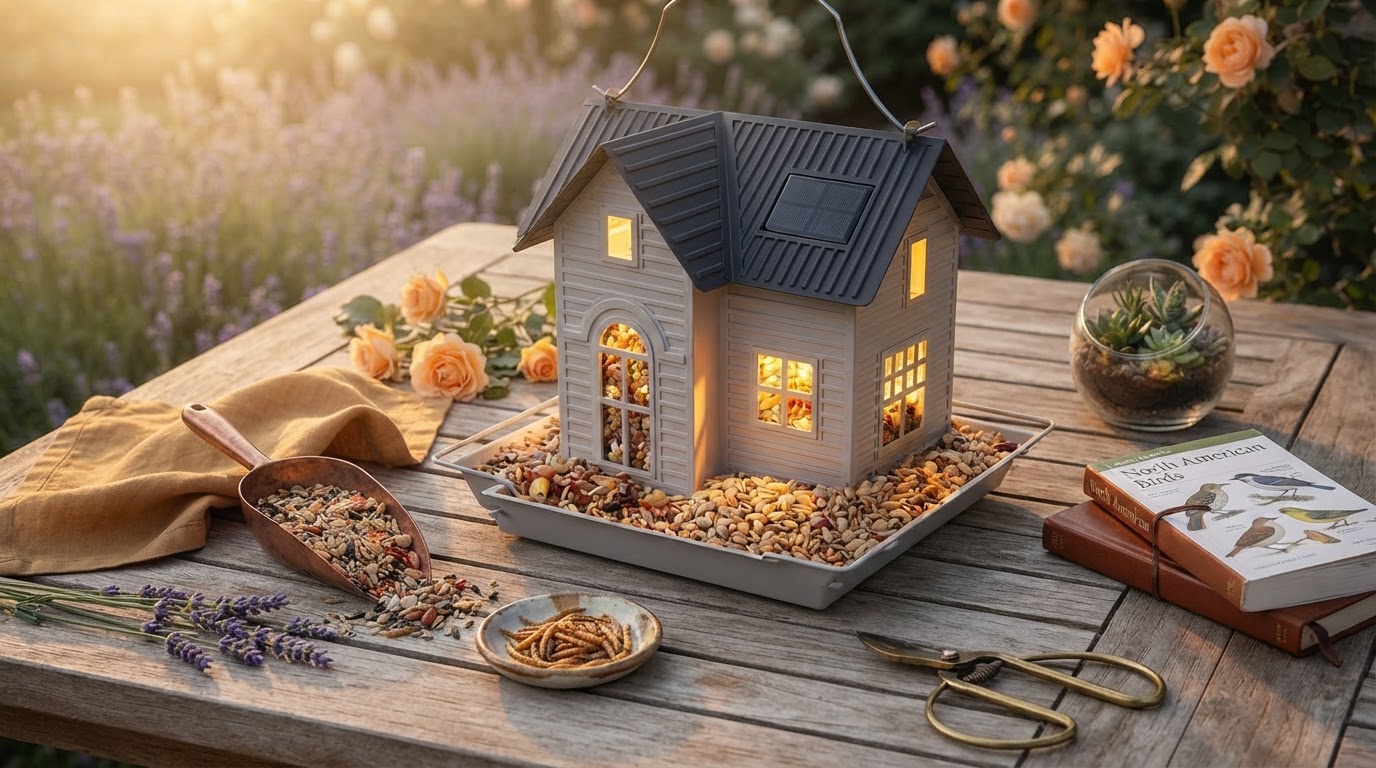
Somewhere around week two, I began to see how the Solar Bird House Feeder fundamentally changed the rhythm of my outdoor space. It isn't just a container for seeds; it is a structural element that harnesses the sun to define the garden's perimeter. The unit functions as a solar bird feeder for outside hanging, utilizing integrated panels to store energy throughout the day. This energy powers an internal glow that transforms the feeder into a beacon once dusk settles. Unlike harsh floodlights, the illumination is soft, designed to highlight the silhouette of the house without startling the local inhabitants. It turns out that this dual-purpose design solves the primary aesthetic hurdle of modern birding: the "empty chair" effect where a feeder looks lonely and dormant for twelve hours a day. By incorporating a glow in the dark bird feeder house element, the garden maintains a sense of life even after the goldfinches have tucked away for the evening. I keep coming back to the way the light spills through the feeding ports, casting long, geometric shadows on the grass below. It provides a focal point that anchors the garden, making the space feel inhabited and intentional. The integration of technology here isn't about complexity; it is about extending the window of time we get to enjoy our outdoor investments. Whether you are looking for a light up bird house for garden use or a high-capacity feeding station, the structural integrity of a well-weighted solar unit ensures it remains a centerpiece rather than a distraction. The soft glow acts as a subtle guide through the yard, providing just enough visibility to navigate the path without the clinical feel of motion-sensor LEDs.
When selecting a piece to anchor your landscape, the decision involves more than just picking a style; it requires an understanding of how the object interacts with light, weather, and wildlife. I have found that a successful installation relies on a specific framework of durability and placement. First, consider the placement of the solar cells. For a Solar Bird House Feeder to function as intended, it needs unobstructed access to southern light, yet it must remain in a location where the birds feel protected from overhead predators. Second, the weight of the unit matters. A feeder that is too light will swing violently in autumn winds, spilling seed and potentially damaging the internal solar components. Third, look for a design that prioritizes easy cleaning; a solar unit that cannot be easily disassembled will eventually suffer from moisture buildup, which can cloud the light output and compromise the health of the birds.
- Prioritize high-conversion solar panels that function even on overcast days.
- Ensure the hanging mechanism is rated for at least twice the weight of the feeder when full.
- Select a light temperature that mimics natural moonlight rather than cool blue tones.
- Verify that the seed tray has adequate drainage to prevent mold after rain.
- Opt for housing materials that are UV-resistant to prevent fading and cracking over time.
Shop Solar Bird House Feeder here