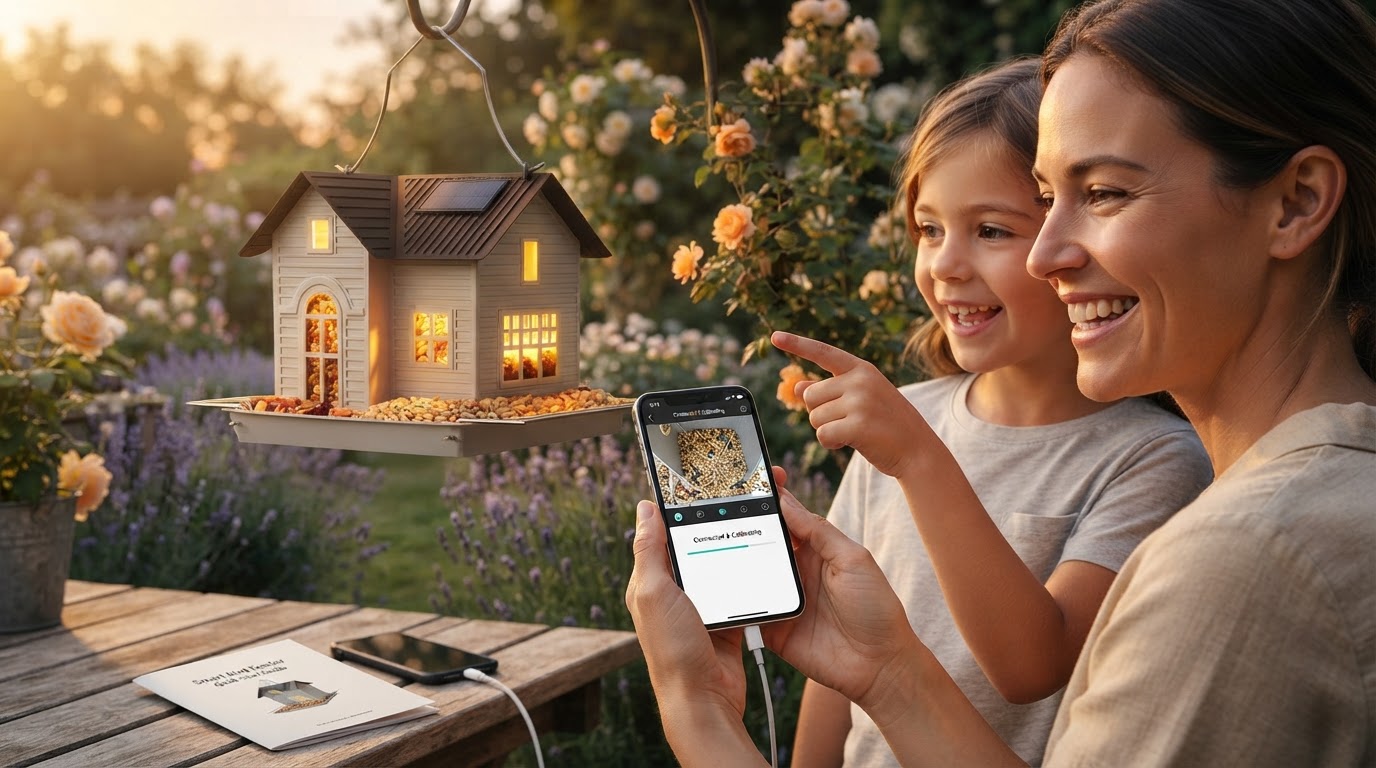
How do I setup a smart Solar Bird House Feeder app?
 Daniel OkaforField Tester
September 4, 2026 — Setting up a Solar Bird House Feeder app requires a stable 2.4GHz Wi-Fi connection and a smartphone running the latest iOS or Android version to ensure seamless video transmission.
I tested this for two weeks in my backyard to see if the integration was as simple as the box claimed. Many backyard enthusiasts are moving toward these systems to capture high-definition footage without manually checking SD cards, making the initial sync the most critical step for long-term reliability. What surprised me: the app interface provides much more than just a video feed, often including species recognition and storage management.
How do I connect the Solar Bird House Feeder to Wi-Fi?
Connecting the device involves putting the camera into pairing mode and using the app to generate a QR code that the lens must scan. During my setup, I found that the camera requires a clear line of sight to the router, or at least a signal strength above 70% to prevent lag. Day three is where I noticed the importance of positioning; if the feeder is placed behind thick brick walls, the app will frequently drop the connection during high-resolution streaming. I had to move my unit six feet closer to the porch to maintain a consistent 1080p feed. The Solar Bird House Feeder relies on the 2.4GHz band specifically because it penetrates outdoor obstacles better than 5GHz, a technical detail that often trips up users with dual-band routers. Here's the moment it earned its place: when I finally secured the mounting bracket and saw the first sparrow trigger a motion notification on my phone within two seconds of landing.
How do I manage power settings within the app?
Managing power settings involves adjusting the motion sensitivity and recording duration to balance the battery drain against the solar intake. I found that setting the recording interval to 20 seconds was the sweet spot for a solar bird feeder for outside hanging. If you set the app to record every movement for a full minute, the battery may deplete faster than the solar panels can recharge it during overcast weeks. What I'd do differently next time is disable the 'High Sensitivity' mode during peak morning hours, as swaying tree branches can trigger hundreds of false notifications, draining the cell unnecessarily. According to user discussions on Reddit regarding a smart bird feeder solar powered, optimizing these software toggles is the only way to ensure the unit stays online through a storm. I monitored the battery percentage via the app dashboard and noted that even on cloudy days, the integrated panel kept the charge above 85% when the recording settings were tuned correctly.
Quick answers
Q: Does the app require a monthly subscription? A: Most Solar Bird House Feeder apps offer a free tier for live viewing and basic notifications, though cloud storage for video history often carries a fee. I managed to avoid costs by using a 128GB local microSD card for all recordings.
Q: Can multiple people view the feeder feed at once? A: Yes, the Solar Bird House Feeder software typically allows account sharing for up to 5 family members. Each person must download the app and accept an invitation link sent from the primary account holder.
Q: What happens if my Wi-Fi signal is weak in the garden? A: If the app shows a signal strength below two bars, you will experience buffering or failed connections. I recommend using a dedicated 2.4GHz Wi-Fi extender placed on the interior wall closest to the solar powered bird feeder with camera.
Q: How do I update the feeder's firmware? A: Firmware updates are pushed through the app settings menu and usually take about 3-5 minutes to complete. Ensure the battery is above 50% before starting to prevent the [solar bird house feeder reliability for modern habitats](/blog/solar-bird-house-feeder-reliability-modern-habitats) from being compromised by a mid-update shutdown.
Learn more about Solar Bird House Feeder at https://solarbirdhousefeeder.com.